Skip to content






Table of Contents
i Quick Answer
Composite decking can get slippery when it’s wet, dirty or covered in mould, but how slippery it gets depends on the board, where it’s installed and how well it’s maintained. Anti-slip composite decking has a textured surface that gives your feet more grip, especially when wet, though it doesn’t mean you can’t slip. Neither composite nor timber is safer in every case, since either can get slick when wet or neglected. To check a board’s slip resistance, look at the manufacturer’s specifications and any test results or slip-resistance rating. In Australia, that’s usually a P rating from the AS 4586 test, where a higher number means more grip when wet. To keep a deck from getting slippery, sweep regularly, wipe up spills quickly, keep the gaps between boards clear, and only clean mould or coat the boards using methods the manufacturer approves.
✓ Key Takeaways
- Grip depends on the board you choose, how it’s installed, how well water drains and how often you clean it.
- Wet, shaded and dirty boards are more likely to become slippery, particularly where mould or organic matter builds up.
- A rough-looking surface does not automatically prove slip resistance. Manufacturer test information is more useful than appearance alone.
- Check whether the available test results cover wet conditions, dry conditions or both before comparing decking products.
- “Anti-slip” does not automatically mean a product has a verified slip-resistance rating. If the rating or test details are unclear, ask the supplier.
- Grooves can improve grip, but they can also collect dirt, pollen and leaves, so regular cleaning is important.
- Rather than asking which decking material is safest overall, consider which product suits your site, drainage conditions and maintenance routine.
- Pools, stairs and other areas exposed to frequent moisture need extra consideration. Check the board’s slip-resistance rating, drainage and applicable local requirements.
- A quick sweep once a week, plus another clean after a major storm, can help prevent dirt and debris from building up on the deck.
A deck should be the most relaxed corner of your home. It’s where the barbecue happens, where the kids run in from the pool, and where the morning coffee tastes a little better.
So it’s no surprise that many homeowners ask the same thing: can a deck get slippery when it’s wet?
Honestly, yes. Composite decking can get slippery when it is wet, dirty or covered in mould. But how slippery it is depends on the board, where it is installed, and how well it is maintained.
This guide covers what affects composite decking’s slip resistance, how anti-slip boards work, and what to consider when choosing boards for your outdoor space.
Is Composite Decking Slippery When Wet?
In short, yes. But it also depends on several factors, and the reasons are fairly ordinary. A board that feels perfectly steady on a dry afternoon can feel quite different after rain. Especially if nobody has swept it in a few weeks.
Here are four things that shape how a deck behaves underfoot.
Board
Finishes matter a lot. A smooth or glossy finish can be more slippery than a deeply textured one.
Surface
If there is dirt, leaves or slime on the board, then it does cut down the grip on any material,
Installation
Gaps between boards are necessary because a slight fall lets water run off instead of sitting there.
Spot
A shady side path and a pool surround do not need the same level of care.
When someone says their composite deck is slippery, it is often because it was wet, shaded, and overdue for a clean. That is why sort those out, and the problem usually shrinks.
What Actually Makes a Deck Slippery?
Rain gets most of the blame, but it rarely works alone. Most slippery decks have moisture or something sitting on them. Shade can also cause it because it keeps the board from drying for long. Here is what usually turns up:

- Standing water that has nowhere to go
- Wet leaves and other garden debris
- Mould or algae, which shows up as a green film in shady spots
- Grease and food spills from outdoor cooking
- Dirt that settles into the surface texture
- Poor drainage around or under the deck
- Cleaning residue or coatings that were never made for decking
If a deck is on the shady side of a house, then it can become slippery during autumn. Leaves gradually land on the boards, and if you don’t sweep them away, they can stay wet during a rainy weekend. The boards have not failed. The soggy leaves and the slime growing beneath them are the culprits. And a broom would have fixed everything. This is one common scenario, not a verdict on any particular product.
What Is Anti-Slip Composite Decking?
Anti-slip composite decking is a deck board with a textured surface that gives your feet more grip, especially when it’s wet. The grip comes from the board itself. Most are embossed or brushed with a wood-grain pattern, so the texture usually won’t wear off.
“Anti-slip” doesn’t mean you can’t slip. Any deck gets slick once there is enough water, algae or wet leaves on it. So even a well-textured board needs regular sweeping and the occasional wash.
If you want more than the label to go on, check the board’s data sheet for its slip rating. In Australia, that’s usually a P rating from the AS 4586 test, and a higher number means more grip when wet.
Why Texture Matters So Much?
Texture is the part of a board you can actually see and feel. So, it is the natural place to start. A few things are worth knowing before you begin comparing the samples.
Smooth Versus Textured
Run your hand over a sample. If it feels smooth and shiny when dry, you can guess how it will feel when wet. Boards with deep grain or embossing have fine ridges for shoes and bare feet to grip. That is why it is the best idea behind most non-slip decking.
A Good Look Isn’t Proof
A board can look rough and rugged in a photo and still have no test results to back it up. Looks can’t confirm slip resistance, which is why the paperwork matters more than the brochure.
Grooves Need Cleaning Tool
Grooved boards can grip well, but the grooves also catch dirt, pollen and leaves. If you leave that alone, the build-up can become slippery. Even well-textured boards need a quick sweep now and then.
Understanding Slip-Resistance Information
Don’t rely on the product label alone when choosing composite decking. Check the manufacturer’s specifications and any test results they provide to better understand how the boards actually perform.
Here’s what to look for:
- Check the product specifications
Check whether the manufacturer provides a slip-resistance rating or test report. This will help you understand whether the boards have been tested for grip.
- Look at wet and dry conditions
Some boards feel grippy when dry but turn slippery after rain. Check whether the test results cover wet conditions, dry conditions or both.
- Think about where you are installing it
A covered deck won’t face the same conditions as an open deck exposed to rain, or one beside a swimming pool. Choose boards that suit the spot where you’ll actually use them.
- Don’t rely on the “anti-slip” label alone
A product advertised as anti-slip doesn’t necessarily have a verified slip-resistance rating. If you can’t find the details, ask the supplier.
Checking these things before you buy can save you from choosing decking that isn’t right for your space.
Composite Vs Timber: Which is Less Slippery?
Neither wins every time. Timber and slip-resistant composite can both turn slick when they’re wet, mouldy or neglected, so condition and care matter as much as the material.
The table sets the two side by side.
| Factor | Composite Decking | Timber Decking |
| Surface texture | Built in at the factory, so it varies by product, from smooth to deeply embossed. | Natural grain, which changes as it weathers and wears. |
| Mould and Algae | It can grow on dirt and damp debris, especially in shade | It can grow in damp, shaded spots and on rough surfaces that hold debris |
| Upkeep for grip | Regular sweeping and cleaning with manufacturer-approved methods | Regular cleaning, plus care with any oil or sealer that changes the surface. |
| Coatings | Avoid oils and paints the manufacturer has not approved | Finishes can change how the surface feels, so follow the product’s advice |
| What to ask for | Slip-resistance test information from the manufacturer. | Information on the specific species and finishes from the supplier |
So rather than asking which material is safer overall, ask which product suits your site and how you’ll look after it.
Composite Decking Around Pools, Stairs and Other Wet Spots
Places that stay wet need a bit more thought. People are often barefoot, kids move fast, and steps and edges leave very little room for error. If you’re planning a spot like this, here’s what to check:

- Look at the slip-resistance information for the exact board you plan to use.
- Check drainage, including the deck slope and the gaps between boards, so water can’t pool on the surface.
- Consider the steps, edges, and anything next to the deck, like pavers or tiles.
- Follow your approved plans and any local safety requirements, especially near a pool.
Say you are choosing boards for a poolside deck and two samples look almost identical. One comes with clear slip-resistance test information. The other comes with a glossy brochure. The first is the safer one to build on, because looks tell you very little.
How to Stop Decking From Being Slippery
Most slippery decks don’t need big repairs. A few simple habits usually do the trick, and none of them takes much time.
- Sweep off leaves and muck regularly, especially in autumn.
- Wipe up spills as soon as they happen. Oil and food make boards slick fast.
- If you get mould, only clean it the way the manufacturer says is okay.
- Keep the gaps between boards clear so water can drain away.
- Don’t put oil, paint or any coating on the boards unless the manufacturer says you can. It can change how they feel underfoot.
A quick sweep once a week, and another after a big storm, is normally enough
What to Ask Your Supplier Before You Buy
It’s worth asking a few questions before you hand over any money, because it can save you a lot of hassle later. Take this list with you when you go.
- Is slip-resistance documentation available for this board?
- Is it suitable for the area I have in mind?
- What cleaning and upkeep does it need?
- Are there any limits on poolside or commercial use?
- What do the warranty and installation instructions require?
A good supplier will be happy to answer these, and how they answer tells you plenty.
The Takeaway
Grip comes from several things working together: the board you choose, how it’s installed, how well water drains, and how often you clean it. Anti-slip composite decking gives you a head start, but no deck can guarantee that nobody will ever slip. Ask the right questions, check the paperwork and keep the boards clean, and you’ll enjoy your deck in any weather.
Comparing composite decking for your project? Check out Titan Trade Centre’s WPC decking range, or contact the team for current specifications and product documentation.
FAQs
It can. Just like most outdoor surfaces. How much grip you get depends mostly on the texture, how well the water drains off, and whether the boards are clean.
It means the surface is designed to grip better than a plain board. It does not mean you can not slip on it, so ask to see the test results behind the claim.
Yes. If the board is meant for wet areas and the supplier can show you slip-resistance documents. You will also want good drainage and to check your local rules.
Not always. Grooves can help your feet grip, but they collect dirt, leaves and pollen. Sweep them out now and then, and still ask to see the test results for the board.
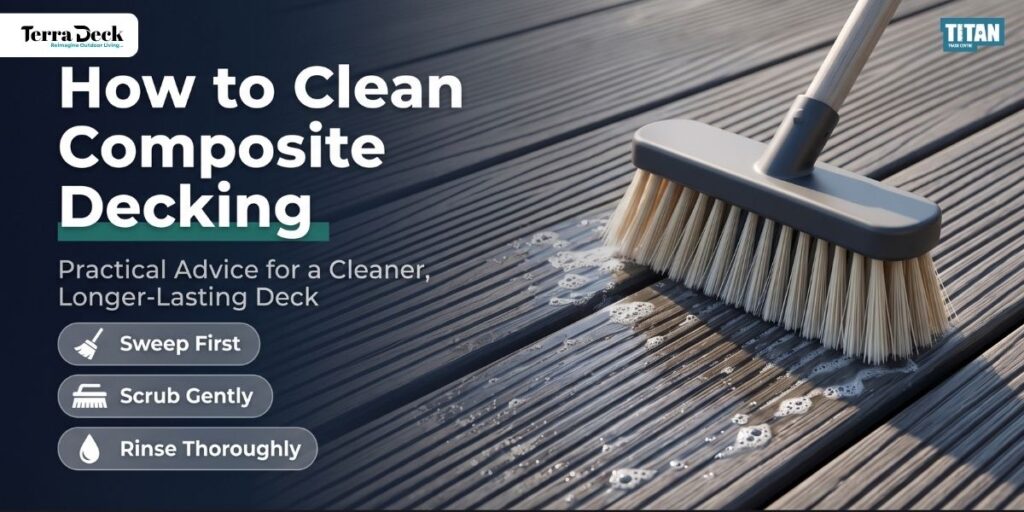
To clean slippery composite decking, sweep off loose debris first, then wash it as the manufacturer recommends. Harsh or unapproved cleaners can leave a film on the surface, and that can make things worse.
Not necessarily. Either one can get slick if it’s wet or hasn’t been looked after, so how you maintain it and how well it drains matter more than what it’s made of.