Skip to content




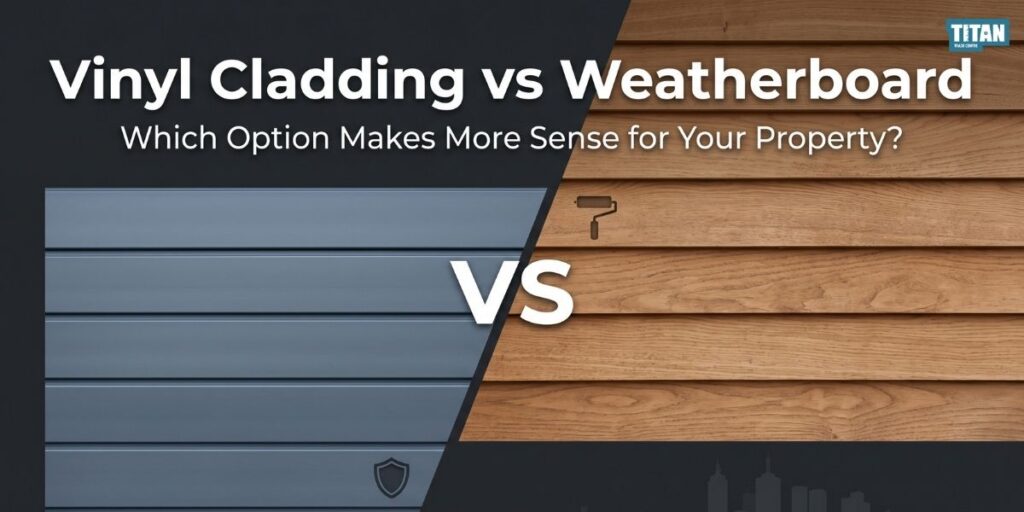
Table of Contents
When planning an exterior upgrade, one question comes up again and again: should the property use vinyl cladding or weatherboard?
At first glance, the choice seems straightforward. Both create an attractive external finish. Both protect the structure from the elements. Both are widely used across residential and commercial projects.
But the differences become much clearer once maintenance, durability, appearance, installation requirements, and long-term ownership costs enter the conversation. This is where most people get caught out. They focus on the upfront appearance and overlook the practical realities that will affect the property for years.
For property owners comparing vinyl cladding vs weatherboard, understanding those differences is what matters most.
What Is Vinyl Cladding?
Vinyl cladding is an external wall covering manufactured from PVC. It is designed to protect the building envelope while providing a finished appearance that requires relatively little ongoing maintenance.
Modern vinyl cladding products are available in various colours, profiles, and textures. Some are even designed to replicate traditional timber finishes.
One reason vinyl cladding has gained popularity is its resistance to common maintenance issues associated with natural materials. It does not require regular painting and is generally unaffected by termites.
What Is Weatherboard?
Weatherboard refers to overlapping horizontal boards installed on external walls to provide weather protection and visual appeal.
Many people automatically associate weatherboards with timber. That is understandable. Traditional weatherboard homes throughout Melbourne and across Australia have historically been built using timber products.
However, weatherboard is a profile and installation style rather than a single material. Weatherboards can be manufactured from timber, fibre cement, vinyl, and other approved building materials.
Are Vinyl Cladding and Weatherboard the Same Thing?

No.
This is one of the most common misunderstandings in the industry. Vinyl cladding describes the material. Weatherboard describes a style of external wall covering.
A weatherboard can be made from vinyl. It can also be made from timber or fibre cement.
As a result, some comparisons between vinyl cladding and weatherboard are technically comparing a material with an installation profile.
When people discuss vinyl cladding vs weatherboard, they are usually comparing modern vinyl cladding systems against traditional timber weatherboards.
Which Option Requires Less Maintenance?
For many property owners, this becomes the deciding factor.
Vinyl cladding generally requires less ongoing maintenance than traditional timber weatherboards. Regular cleaning is often enough to maintain its appearance.
Timber weatherboards require more attention over time. Depending on the product used and environmental conditions, repainting, resealing, repairs, or replacement of damaged sections may become necessary.
In practice, maintenance expectations are often underestimated. Many property owners budget for installation but overlook the cost and effort involved in preserving timber finishes over the years.
That can become expensive.
How Do They Compare for Durability?
Durability depends on several factors, including product quality, installation standards, environmental exposure, and ongoing maintenance.
Well-maintained timber weatherboards can perform exceptionally well for decades. There is a reason many older weatherboard homes remain standing today.
Vinyl cladding is designed to withstand moisture, does not rot, and is generally resistant to insect damage. These characteristics appeal to owners looking for a low-maintenance exterior solution.
However, durability should never be assessed in isolation. The quality of installation is often the main issue. Even premium materials can underperform when installation shortcuts occur.
What About Appearance?
Appearance is subjective.
Some property owners strongly prefer the authentic character and natural grain variation associated with timber weatherboards. The warmth of natural timber remains difficult to replicate perfectly.
Others prioritise consistency, colour stability, and a clean modern finish. Vinyl cladding can deliver exactly that.
Visual preferences often change once maintenance obligations are considered. A finish that looks impressive on installation day may feel very different after years of upkeep requirements.
For this reason, appearance should always be evaluated alongside long-term ownership expectations.
Which Option Is More Cost-Effective?
Many people focus exclusively on the purchase price. That approach rarely tells the whole story.
Initial installation costs vary depending on the product selected, project complexity, labour requirements, and site conditions.
The more meaningful comparison is lifetime cost.
Timber weatherboards may involve ongoing painting, sealing, repairs, and maintenance expenses. Vinyl cladding generally has lower maintenance demands throughout its service life.
On paper, one option may appear cheaper. In practice, long-term ownership costs can tell a different story.
Can Vinyl Cladding Be Installed Over Existing Weatherboards?

In certain situations, yes.
Vinyl cladding can sometimes be installed over existing weatherboards, provided the existing structure is sound, and the installation complies with relevant building requirements.
However, assumptions should never be made.
The condition of the underlying structure must be properly assessed before proceeding. Hidden moisture issues, structural movement, or damaged substrates can create problems if ignored.
What Should Property Owners Consider Before Choosing?
Rather than asking which product is better, the more useful question is this:
Which option aligns with the project’s objectives?
Consider:
- Desired appearance
- Maintenance expectations
- Budget considerations
- Environmental exposure
- Long-term ownership plans
- Local building requirements
- Product warranties
- Installation quality
The requirement or choice of building materials should always align with applicable regulations, building codes, and guidance from relevant authorities.
That should be the starting point. Not the final step.
At Titan Trade Centre, Melbourne’s trusted supplier of decking and wall cladding products, the focus is on helping customers explore quality exterior solutions suited to their project requirements. The final material selection should always be made in accordance with relevant building regulations, project specifications, and professional advice where required.
Contact us today to get the right cladding for your home!
FAQs
Is vinyl cladding cheaper to maintain than timber weatherboards?
Generally, yes. Vinyl cladding usually requires less ongoing maintenance because it does not need regular painting or sealing like traditional timber weatherboards.
Can weatherboards be made from materials other than timber?
Yes. Weatherboards can be manufactured from timber, fibre cement, vinyl, and other approved materials.
Does vinyl cladding last a long time?
High-quality vinyl cladding can provide long-term performance when installed correctly and maintained according to manufacturer recommendations.
Can damaged weatherboards be repaired?
In many cases, individual weatherboards can be repaired or replaced. The repair approach depends on the material, extent of damage, and overall condition of the wall system.
Does vinyl cladding help protect against moisture?
Vinyl cladding is designed to resist moisture exposure as part of a properly installed wall system. Performance depends on correct installation and compliance with building requirements.