Skip to content



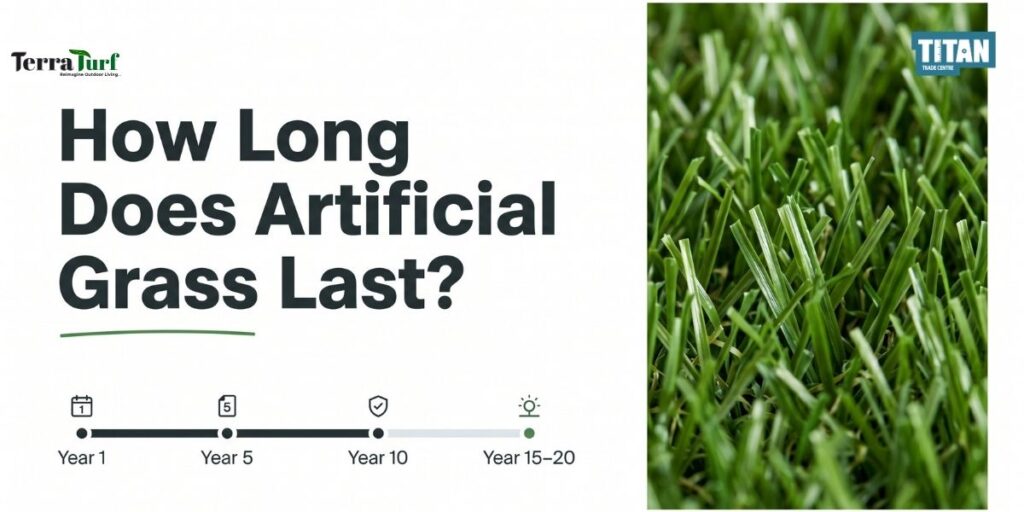
Table of Contents
Artificial grass has become a popular choice across Melbourne for homeowners, businesses, schools, and commercial properties looking for a cleaner, greener outdoor space without the constant upkeep of natural lawns.
Yet one question comes up more than almost any other.
How long does artificial grass last?
The answer depends on several factors, including product quality, installation standards, usage levels, and ongoing maintenance.
The good news is that modern artificial grass is built to last. When installed correctly and cared for properly, it can provide years of reliable performance while maintaining its appearance and functionality.
Let’s break down what really affects the lifespan of artificial turf and what can be done to get the most value from the investment.
The Typical Lifespan of Artificial Grass
Most quality artificial grass products last between 15 and 20 years. That is the general benchmark homeowners can expect when purchasing a premium product designed for Australian conditions.
However, not all artificial turf is created equal. Some lower-grade options may begin showing wear much sooner, particularly in high-traffic areas or locations exposed to intense sunlight.
Many buyers focus heavily on upfront cost and pay less attention to product specifications. While the cheaper option can look attractive, it often leads to earlier replacement and higher long-term costs.
The artificial grass lifespan is heavily influenced by what goes underneath the surface as well. A properly prepared base and professional installation can make a significant difference to long-term performance.
What Has the Biggest Impact on Synthetic Turf Durability?
Several factors determine how well artificial grass holds up over time.
Product Quality
Premium artificial grass is manufactured using stronger fibres, advanced UV stabilisation, and durable backing materials designed to withstand Australian weather conditions.
Lower-quality products may initially look similar. After a few years, the difference often becomes obvious. Fibres can flatten, colours may fade, and sections may start to deteriorate.
Installation Standards
Even the best artificial grass can struggle if installed on a poorly prepared base.
Proper drainage, correct compaction, and accurate joining techniques all contribute to long-term performance. In practice, installation problems are among the most common causes of premature wear.
The turf itself may still be perfectly good. The foundation underneath is what fails.
Foot Traffic Levels
A decorative lawn in a front yard will typically last longer than a heavily used play area or commercial space.
Constant foot traffic gradually compresses fibres and increases wear patterns. Modern products are designed to handle significant use, but traffic volume always affects lifespan.
Exposure to Weather Conditions
Australian weather can be demanding. Strong UV exposure, heavy rain, temperature fluctuations, and prolonged heat all place stress on outdoor materials. High-quality artificial turf is specifically designed to resist these conditions, which is why UV protection should never be overlooked when selecting a product.
How Long Does Fake Grass Last in High-Traffic Areas?

High-traffic zones naturally experience more wear than decorative spaces. That does not mean artificial grass will fail quickly.
Quality products installed in busy areas can still deliver well over a decade of service. The key difference is that regular maintenance becomes more important. Brushing fibres back into position, removing debris, and addressing minor issues early can significantly extend synthetic turf durability.
Many people assume artificial grass is completely maintenance-free, but it isn’t.
Low maintenance? Absolutely.
Maintenance-free? Not quite.
Does Artificial Grass Fade Over Time?
All outdoor materials experience some degree of weather exposure. Artificial grass is no exception.
Modern products are manufactured with UV-resistant technology designed to minimise fading and colour loss. As a result, quality turf generally maintains its appearance for many years.
But not all UV protection systems perform equally. Lower-grade products are more vulnerable to colour changes after prolonged exposure to sunlight.
When evaluating options, UV resistance should be considered a core feature rather than an optional extra.
Signs That Artificial Grass Is Reaching the End of Its Lifespan
Artificial turf rarely fails overnight. Instead, wear develops gradually.
Common indicators include:
- Flattened fibres that no longer recover after brushing
- Noticeable colour fading
- Backing deterioration
- Increased seam separation
- Drainage issues caused by ageing materials
- Visible thinning in high-use areas
In many cases, isolated repairs can resolve minor issues. Once multiple signs begin appearing across larger sections, replacement may become the more practical solution.
How to Extend Outdoor Artificial Grass Durability

Getting the longest possible lifespan from artificial grass is not complicated. A few simple practices can make a substantial difference:
Keep the Surface Clean
Leaves, dirt, and organic debris should be removed regularly. Accumulated debris can affect drainage and create unnecessary stress on the turf system over time.
Brush the Fibres Periodically
Regular brushing helps maintain an upright appearance and reduces matting in frequently used areas.
Address Spills Promptly
Most spills are easy to clean when dealt with quickly. Leaving contaminants on the surface for extended periods can create avoidable staining and odour issues.
Check Drainage Performance
Water should flow through the system efficiently. If drainage begins to slow, it is worth investigating before a small issue develops into a larger problem.
Is Artificial Grass Worth the Investment Long Term?
For many property owners, the answer is yes.
A quality installation can provide 15 to 20 years of attractive, functional ground cover while significantly reducing mowing, watering, fertilising, and ongoing lawn maintenance.
The low-maintenance lawn lifespan often surprises people. When compared with the ongoing upkeep required for natural grass, artificial turf can deliver strong long-term value.
The biggest mistake seen time and time again is focusing solely on purchase price.
Quality materials and proper installation usually determine whether artificial grass performs well for the next two decades or starts causing headaches much sooner.
Final Thoughts
So, how long does artificial grass last?
In most cases, quality artificial turf installed correctly can last anywhere from 15 to 20 years, and sometimes longer under favourable conditions.
The exact outcome depends on product quality, installation standards, maintenance habits, and usage levels.
Homeowners who choose reputable products and take a proactive approach to care typically achieve the best results. Artificial grass is designed to be durable, practical, and long-lasting. When those fundamentals are in place, it becomes a reliable outdoor solution that continues performing year after year.
FAQs
How long does artificial grass last in Australia?
Most premium artificial grass products in Australia last between 15 and 20 years. Climate conditions, traffic levels, installation quality, and maintenance practices all influence the final lifespan.
Does artificial grass fade in the sun?
Quality artificial grass is manufactured with UV-resistant technology that helps minimise fading. Some gradual colour change can occur over many years, but premium products are designed to maintain their appearance for extended periods.
Can artificial grass last 15–20 years?
Yes. High-quality artificial turf installed correctly and maintained regularly can often last between 15 and 20 years, making it a long-term landscaping solution.
How do you maintain artificial grass properly?
Regular maintenance includes removing debris, brushing fibres to prevent matting, cleaning spills promptly, and ensuring drainage systems remain clear and functional.