Skip to content




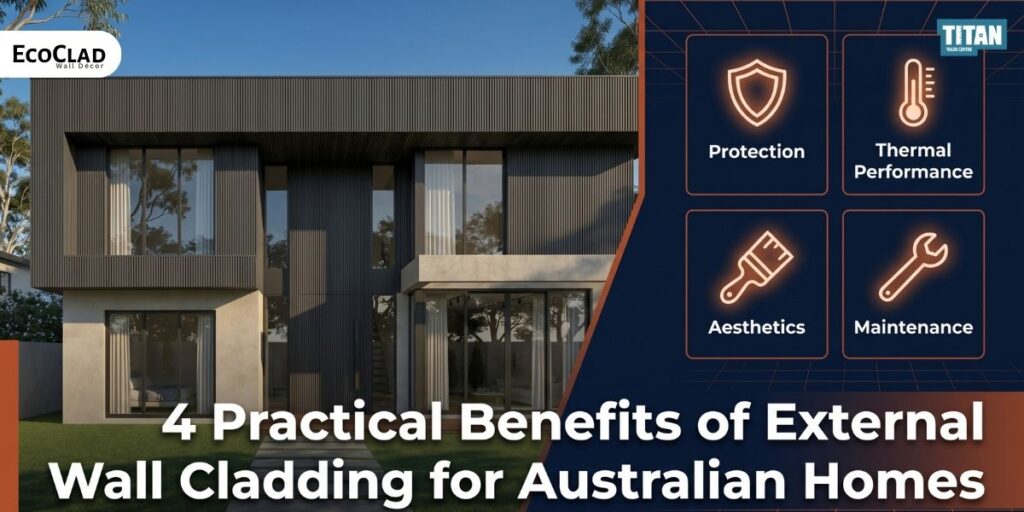
Table of Contents
Australian homes deal with conditions that are hard on exterior surfaces. Strong UV exposure, sudden temperature changes, moisture movement, and heavy seasonal rain all wear materials down faster than many homeowners expect. In Melbourne, especially, a façade can look solid one year and tired the next if the exterior is not properly protected.
That is one reason external wall cladding keeps gaining attention across both renovations and new builds. Not because it is fashionable. Because it solves practical problems that show up repeatedly in residential construction.
And some of those problems are expensive.
So, here are four practical benefits of external wall cladding that continue to make it a smart option for Australian homes.
1. Better Protection Against Harsh Weather Conditions With External Wall Cladding
Exterior walls absorb constant punishment from the environment. Over time, that exposure starts showing up through fading finishes, minor cracking, moisture staining, and surface deterioration.
External cladding creates another layer between the structure and the elements. When installed correctly, it helps reduce direct weather impact on the underlying wall system.
The practical benefit is not always obvious immediately. It becomes obvious five or ten years later.
A common issue seen across older homes is moisture finding its way into vulnerable areas around poorly protected exterior surfaces. Sometimes it starts near windows. Sometimes around joints where movement was not properly accounted for during installation. Small entry points become larger problems once water repeatedly gets behind the façade.
This is where shortcuts usually backfire.
Many people assume all exterior cladding systems perform roughly the same if they look similar from the street. In reality, installation detailing often determines whether the system lasts properly or develops issues early. Drainage gaps, ventilation cavities, flashing placement, and expansion allowance all play a role.
2. Improved Thermal Performance Throughout the Year

Heating and cooling costs continue to rise across Australia, which has pushed more homeowners to pay attention to how their homes actually perform thermally.
External wall cladding can help improve thermal efficiency by reducing heat transfer through exposed walls. During summer, that may help reduce heat gain inside the property. During colder months, it can assist in maintaining more stable indoor temperatures when paired with suitable insulation systems.
Rooms exposed to strong western sunlight tend to experience larger temperature fluctuations throughout the day. Homes without effective exterior protection frequently rely more heavily on air conditioning simply to maintain comfort during extended heat periods.
That extra energy use adds up fast.
Still, this is often misunderstood. External wall cladding supports thermal performance, but it does not replace proper insulation design or ventilation planning. Homes perform best when the entire wall assembly works together rather than relying on one product to solve every issue.
3. Modernise Older Homes Without Full Reconstruction
Many older Australian homes remain structurally solid but visually dated. Replacing the entire exterior structure is rarely practical from a cost perspective.
Exterior cladding offers another path.
Updating external surfaces with contemporary cladding profiles, textures, or timber finishes can dramatically improve street appeal without major structural rebuilding. The transformation is often substantial because façades influence how the entire property is perceived.
Also, properties with tired or weathered exteriors often create the impression of broader maintenance problems, even when the interior is well maintained. Updated external cladding helps present the home as properly cared for, which can positively influence resale perception.
That said, visual upgrades should never ignore performance requirements underneath. Covering existing moisture issues or damaged substrates without fixing the underlying cause is one of the biggest mistakes seen during façade renovations.
4. Reduced Long-Term Maintenance Pressure on Exterior Walls
Exterior maintenance becomes far more manageable when wall systems are designed to cope with local conditions properly from the beginning.
That does not mean external wall cladding eliminates maintenance altogether. Nothing exposed to Australian weather is maintenance-free for long. But properly selected and installed cladding systems can help reduce how quickly exterior surfaces deteriorate under constant exposure.
Homes that receive consistent inspection and maintenance generally avoid the large-scale repair costs that follow neglected moisture intrusion or façade failure.
And those repair costs escalate quickly once structural damage begins developing behind the visible surface.
Choose External Cladding That Performs Long Term
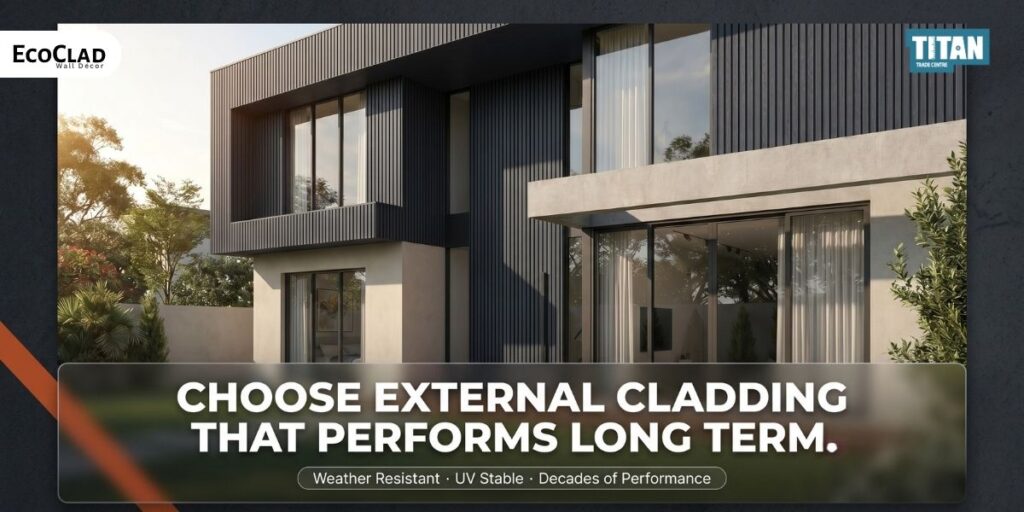
The right external wall cladding should do more than improve street appeal. It should handle Australian conditions properly, suit the project requirements, and continue performing years after installation.
At Titan Trade Centre, Melbourne homeowners and builders can explore quality external cladding solutions designed for both renovation and new-build projects. For those searching for the best external cladding in Melbourne, the focus stays on practical products that balance durability, performance, and design flexibility.
FAQs
Q. Does external wall cladding suit both modern and older homes?
A. Yes. External wall cladding is commonly used across contemporary builds, renovations, and façade upgrades for older Australian homes.
Q. Can external cladding improve insulation performance?
A. External cladding can support thermal efficiency when integrated correctly with insulation, ventilation, and wall system design.
Q. What should homeowners check before installing exterior cladding?
A. Compliance requirements, moisture management, environmental exposure, ventilation design, and installer experience should all be assessed carefully before installation.