Skip to content




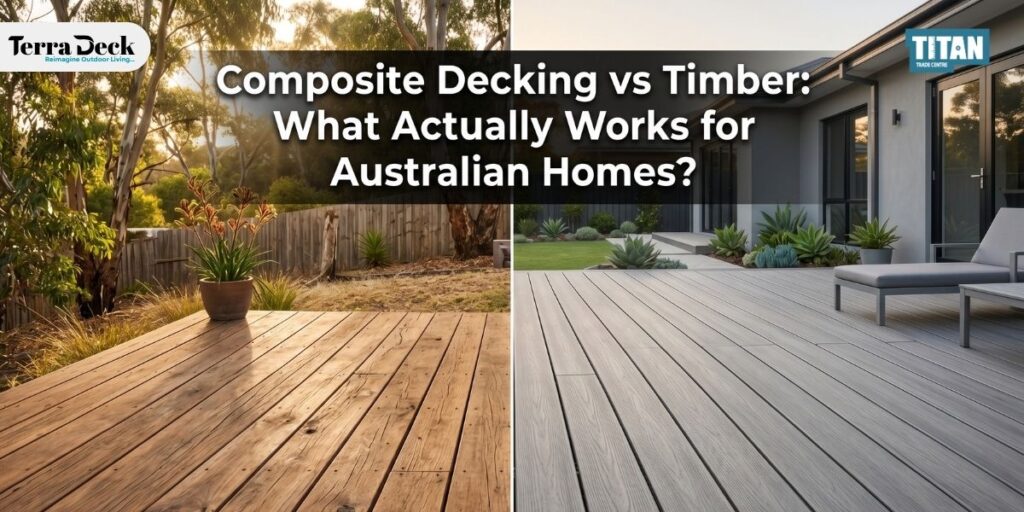
Table of Contents
Composite decking vs timber, the choice between the two may sound simple to a lot of people.
Both options are everywhere across Australia. Both claim durability. Both look good in brochures. But once real conditions like heat, moisture, compliance and maintenance come into play, the decision gets complicated.
This is where most people get confused.
What Should Be Decided First?
Before comparing timber decking vs composite, one thing needs to be clear: What matters most for the project?
Is it:
- Low upkeep
- Natural look
- Longevity in harsh weather
- Or strict compliance requirements
Many skip this step and then end up choosing the wrong material for the wrong reason.
How Does Timber Decking Actually Perform?
Timber has been the backbone of outdoor decking materials in Australia for decades. That hasn’t changed. But expectations often have.
Timber Delivers
- Authentic, natural appearance
- Strong structural performance
- Flexibility in finishes and design
For many Australian homes, timber still sets the benchmark visually.
The Issue With Timber Decking
Maintenance. This is the main issue.
Timber needs regular (not occasional) oiling, sealing, and inspection. If you miss that, problems like fading, cracking and moisture damage start.
People choose timber, then treat it like a low-maintenance product, which ends up not meeting their expectations.
What Makes Composite Decking Different?
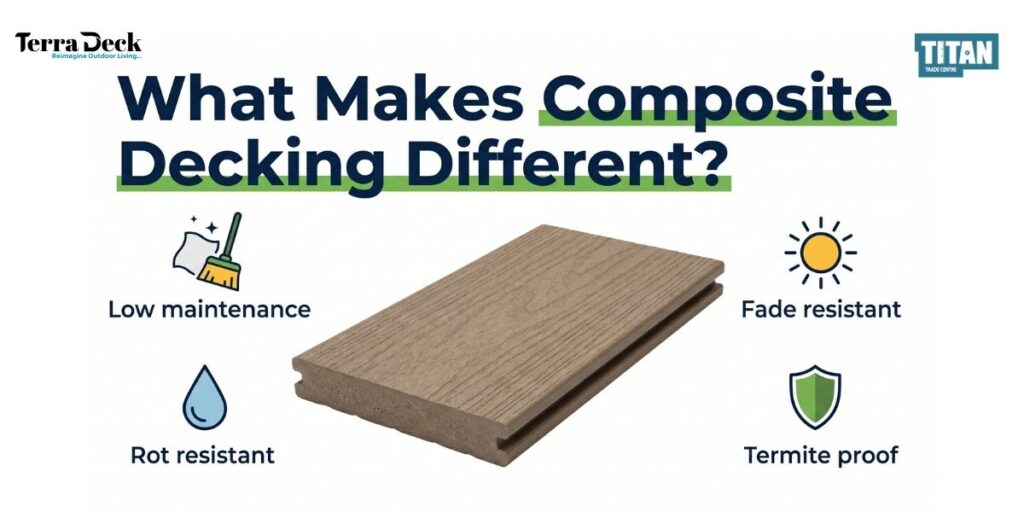
Now, looking at composite decking vs timber decking, composite is usually positioned as the easier option.
That’s not marketing fluff. There’s truth to it.
Key Composite Decking Benefits
- Minimal upkeep (no sanding or staining)
- Resistant to termites and rot
- Stable appearance over time
For households wanting low-maintenance decking options, this becomes very appealing.
Where Composite Falls Short
Heat retention.
Under direct Australian sun, composite boards can get noticeably hotter than timber. While that sounds manageable, it can affect comfort, especially barefoot use in summer.
Cost: What Happens Over Time?
This is often misunderstood.
Upfront View
Composite usually costs more initially. That’s clear.
Timber can be more affordable depending on the species.
Long-Term Reality
Here’s where the shift happens.
Timber brings ongoing costs like oils, treatments, and labour. Over the years, those add up and are often underestimated.
Composite avoids most of that.
So when comparing composite decking vs timber, the cheaper option upfront doesn’t always stay cheaper.
So, What Is the Best Decking for Australian Homes?

There’s no universal answer. Anyone saying otherwise is oversimplifying.
But patterns do emerge.
Timber Often Works Better When:
- Natural aesthetics are a priority
- Ongoing maintenance is acceptable
- Traditional or premium finishes are required
Composite Often Works Better When:
- Low maintenance is critical
- The deck will see heavy, regular use
- Consistency matters more than natural variation
The Bottom Line
When comparing composite decking vs timber decking, the real issue isn’t which is better overall.
It’s whether the material fits the conditions it will face.
Most long-term problems don’t come from the product itself. They come from poor alignment between expectations and reality.
That’s the part that needs attention.
Just remember, a deck is an investment in your home, so make sure you choose wisely. If you are stuck or need a bit more guidance, reach out to the team at Titan Trade Centre. We are here to help you every step of the way.
FAQs
Which is more durable: composite or timber decking?
Both can be durable. Composite requires less upkeep, while timber can last just as long with proper maintenance.
Is composite decking worth the higher cost?
For many, yes. Especially when reduced maintenance is factored in over time.
Does timber decking require a lot of maintenance?
Yes. Regular oiling and sealing are essential to maintain performance and appearance.
What are the main composite decking benefits?
Low maintenance, resistance to rot and termites, and consistent appearance are the key advantages.
What are the timber decking pros and cons?
Pros include natural beauty and strength. Cons mainly involve ongoing maintenance and weather sensitivity.
What is the best decking for Australian homes?
It depends on climate, usage, and compliance requirements. There is no one-size-fits-all answer.